Alzheimer’s is Called a Brain Disease
Alzheimer’s is a brain disease that causes problems with thinking, memory, and behavior issues.
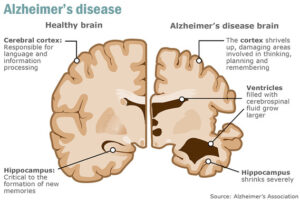
It is the most common form of dementia that affects a person’s memory and other intellectual abilities to carry out daily activities.
Since there is no cure, it has been considered an incurable, degenerative, and fatal disease.
This incurable condition accounts for sixty to eighty percent (60-80 %) of dementia cases.
Although aging is considered one of the criteria, Alzheimer’s is not a part of the aging process although the greatest identified risk factor is increasing age and the majority of people with this kind of brain disorder are sixty-five (65) and older.
Alzheimer’s is not just an ailment for older people.
Some people have early onset also known as younger onset which often occurs when someone is in their forty’s to fifty’s (the 40s to 50s).
Although the course of this disease is different for every individual, there are numerous common symptoms.
The earliest noticeable symptoms are frequently and mistakenly thought to be age-related concerns or manifestations of stress.
In the early stages, the most commonly acknowledged symptom is the inability to obtain new memories, such as difficulty in recalling recently observed facts.
As the disease advances, symptoms include mood swings, irritability, confusion, long-term memory loss, aggression, language breakdown, and the general withdrawal of the sufferers as their senses decline.
Alzheimer’s worsens over time. It progresses where the symptoms gradually worsen over several years.
Progressively, bodily functions are lost, ultimately leading to death.
This illness has been considered the sixth leading cause of death in the United States.
Individuals with this health problem live an average of eight years after their symptoms become noticeable to others, but survival can range from 4 to 20 years, depending on age and other health conditions.
However, this disease has no current cure but treatments for symptoms are available and research continues.