Spot a Stroke
Strokes are serious medical emergencies that can have life-altering consequences if not identified and treated promptly.
Understanding the signs of a stroke and knowing how to react quickly can make all the difference in saving a life and minimizing the long-term effects of a stroke.
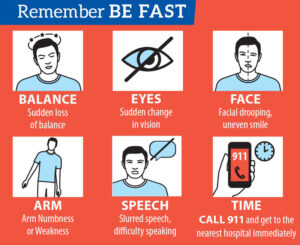
One widely recognized method for spotting a stroke is the FAST method, a simple acronym that helps individuals easily remember the key signs to look out for.
What is a Stroke?
A stroke is like a traffic jam in your brain – something suddenly blocks or bursts a blood vessel, disrupting the flow of oxygen and nutrients. It’s like your brain yelling, “Hey, I need some help over here!”
Types of Strokes
There are a couple of stroke varieties out there.
Ischemic strokes happen when a blood clot clogs a vessel.
Hemorrhagic strokes occur when a vessel bursts like a water balloon.
Both are unwanted guests at the brain party.
Understanding the FAST Method
The FAST method is like your stroke superpower – a quick and snappy way to spot a stroke and get help ASAP, like a medical superhero. Let’s break it down!
Recognizing Facial Drooping
Facial drooping is like a Picasso painting gone wrong – it’s when one side of your face decides to take a nap while the other stays wide awake.
Signs of Facial Drooping
Think your face is playing favorites? Keep an eye out for a crooked smile or one eyelid that’s being a bit lazy – they might be signaling a stroke’s unwelcome arrival.
How to Properly Assess Facial Drooping
Ask your face to do you a favor – smile big and see if both sides are playing along. If one side is MIA or not pulling its weight, it might be time to call in the medics.
Assessing Arm Weakness
Arms should be team players, but sometimes one arm decides to skip arm day and gets all noodle-like. Let’s see if your arms are on the same page.
Identifying Arm Weakness
If one arm starts to rebel and feels weak or numb, or decides to take a nosedive unexpectedly, it might be trying to tell you something fishy is going on.
Testing Arm Strength
Give your arms a test drive – raise them like you’re about to ask a question in class. If one arm isn’t pulling its weight or has a mind of its own, it’s time to hit the emergency button and get some help on the scene.
Checking Speech Difficulty
When it comes to spotting a stroke, checking for speech difficulty is crucial. Changes in speech can be one of the first signs that someone may be experiencing a stroke.
Indications of Speech Difficulty
Common signs of speech difficulty during a stroke include slurred speech, difficulty forming words, or being unable to speak at all. It may sound like gibberish or as if the person is intoxicated.
Conducting a Speech Assessment
To conduct a quick speech assessment, ask the person to repeat a simple sentence. If their speech is slurred, disjointed, or incomprehensible, it could indicate a stroke.
Time is of the essence when identifying speech difficulty in a potential stroke victim.
Time to Call Emergency Services
If you notice any signs of speech difficulty or other stroke symptoms in someone, it’s essential to call emergency services immediately.
Strokes require prompt medical attention to minimize long-term damage and improve outcomes.
Importance of Acting Fast
Acting quickly when you suspect someone is having a stroke can make a significant difference in their recovery.
The faster a stroke victim receives medical treatment, the better their chances of surviving and minimizing potential disabilities.
Conclusion and Summary
Using the FAST method to spot a stroke—checking for Face drooping, Arm weakness, Speech difficulty, and Time to call emergency services—is a simple yet effective way to recognize the signs of a stroke.
Speech difficulty is a key indicator to look out for, and prompt action is vital.
Remember, time lost is brain lost when it comes to strokes, so don’t hesitate to seek help if you suspect someone is having a stroke.
In conclusion, being able to spot a stroke using the FAST method can truly be a lifesaving skill.
By recognizing facial drooping, assessing arm weakness, checking for speech difficulty, and acting swiftly by calling emergency services, individuals can significantly improve the chances of a positive outcome for someone experiencing a stroke.
Remember, time is of the essence when it comes to strokes, so staying informed and prepared can make a world of difference in saving lives and preserving quality of life.
Frequently Asked Questions
1. What is the FAST method for spotting a stroke?
The FAST method is an acronym that stands for Facial drooping, Arm weakness,
Speech difficulties, and Time to call emergency services. It provides a simple and effective way to quickly identify potential signs of a stroke.
2. Why is it important to act fast when suspecting a stroke?
Time is critical when dealing with strokes, as receiving prompt medical attention can greatly improve the chances of recovery and reduce the risk of long-term disability or complications.
Acting fast can save lives and help preserve brain function.
3. Are there other symptoms of a stroke besides the ones mentioned in the FAST method?
While the FAST method covers common signs of a stroke, it’s important to note that strokes can present in various ways, including sudden numbness, confusion, trouble seeing, severe headache, and dizziness.
If you observe any unusual symptoms, it’s crucial to seek medical help immediately.


