Proper Cooking Times for BBQ
Cooking times of different meats can vary, so experts recommend ditching the clock and grabbing a meat thermometer instead.
With summer on the horizon, it’s the perfect time to get outdoors and fire up the grill.
A barbecue is a versatile tool for creating mouthwatering dishes, whether you’re cooking juicy burgers, fish filets, or veggie kabobs.
However, if not done safely, grilling comes with some health risks, including potential food poisoning from bacteria and viruses, such as E. coli, salmonella, and norovirus, and exposure to carcinogenic compounds, aka cancer-causing compounds.
How to safely handle raw meat
When dealing with raw meat, always make sure it’s prepared and handled separately from other ready-to-eat foods.
Don’t let raw meats touch foods that aren’t going to be cooked, such as fresh fruits and veggies, or dishes that are already prepared, like potato or pasta salad.
Bacteria from the raw meat can easily be transferred from your hands to other foods if you’re not careful.
To help avoid cross-contamination, which is the unintentional transferring of bacteria from one item to another, use separate cutting boards, plates, and utensils for raw meats and cooked or prepared items.
On the grill, try to keep other foods from touching the raw meats, too. If raw juices happen to spill onto other items, cook those items thoroughly as well.
Before cooking, it’s crucial to keep raw meat, poultry, and seafood cold at 40 degrees Fahrenheit or lower to help prevent the growth of bacteria.
When storing raw meat in the refrigerator or cooler, make sure it’s kept in well-sealed containers and placed beneath other food items to avoid cross-contamination from direct contact or leaking juices.
Wash your hands with soap and water for at least 20 seconds immediately after handling raw meat and before you touch anything else to prevent cross-contamination.
If you don’t have access to water, use hand sanitizer with at least 60% alcohol content or alcohol-based towelettes.
How long should meat be cooked?
Cooking time can vary, so skip the clock and grab a thermometer.
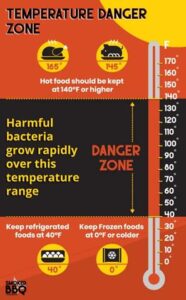
To ensure safety, thoroughly cook your meats until they reach a safe minimum internal temperature that can kill any bacteria or viruses causing foodborne illnesses.
Relying on time, firmness, or color alone does not guarantee your food is fully cooked.
Using a meat thermometer in the thickest part of your meat is the best way to accurately test the temperature.
Minimum internal temperatures for different meats:
Beef, pork, lamb, and veal (steaks, roasts, chops): 145℉ with a 3-minute rest for medium-rare, 160℉ for medium
Ground beef, pork, lamb, and veal (burgers, hot dogs, sausages): 160℉
Poultry (whole, breasts, thighs, ground): 165℉
Fish (whole, filet): 145℉ or until flesh is no longer translucent
Shrimp, lobster, crab, and scallops: Cook until flesh is pearly or white and opaque
Additionally, if raw meat juices get on any other food items, it’s important to also cook those to a minimum internal temperature of 165℉.
Why is it important to avoid charring your food while grilling?
Cooking foods on the grill at a low and slow temperature will allow for even cooking and reduce your risk of adding carcinogenic compounds when burning or charring meats.
Use marinades, high-heat cooking oils (such as avocado oil, olive oil, and safflower oil), and turning the meats every minute to help reduce the risk of carcinogens.
How long can you leave out food after cooking?
The maximum amount of time perishable foods, such as meat, can safely be left at room temperature is two hours.
For those extra-hot days with temperatures over 90 degrees Fahrenheit, limit that time to one hour.
The risk of eating food with bacteria goes up the longer it is left out.
Bacteria grow the fastest at 40 degrees Fahrenheit or below, and hot foods at 140 degrees Fahrenheit or above.
Refrigerate or freeze leftovers within two hours of cooking, and trash or compost any food left out for longer than that.
Do you need to clean your grill after cooking?
Just as with washing your pots and pans after cooking, it’s important to clean your grill after each use.
Cleaning is the only way to fully eliminate bacteria that may be left on the grill.
Those charred pieces of food will end up on your next cooking event and will leave a gritty, gross, and unhealthy surprise on your dishes.
Not to mention, they can impact flavor, release carcinogens, and become a fire hazard.
For an easier time removing any leftover food particles and oils.
Clean the grill with a wet cloth while it’s still warm.
