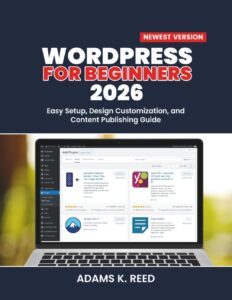
Ultimate Guide to WordPress
Whether you’re starting a personal blog or creating content for your business, the platform’s flexibility, scalability, and user-friendliness make it the go-to choice for millions of bloggers worldwide.
But, how do you ensure your WordPress blog ranks at the top of search results and turns visitors into loyal customers or followers?
1. Start with a Solid Foundation: Choose the Right Hosting & Theme
Before you dive into creating content, it’s crucial to set up your blog on a stable foundation. Here’s what you need to consider:
a. Choose the Right WordPress Hosting
Speed is a ranking factor for Google, and if your site is slow to load, visitors will leave before they even see your content.
b. Pick a WordPress Theme that Speeds Up Conversions
Choose a theme that not only looks great but is also optimized for performance, mobile-friendly, and SEO-ready.
2. Perform Keyword Research and Create SEO-Optimized Content
Creating high-quality content is the backbone of a successful blog.
However, content without SEO is like a tree falling in the forest – it might sound great, but no one will hear it.
a. Keyword Research Tools
Long-tail keywords are less competitive and have higher conversion rates since they are more specific.
b. Optimize Your Posts for SEO
Once you’ve found your target keywords, sprinkle them naturally throughout your post, including:
- Title tag
- Meta description
- Headings (H1, H2, H3)
- Image alt text
- URL slug
c. Write Engaging, In-Depth Content
Long-form content (1,500+ words) tends to perform better on Google.
Make sure your posts are comprehensive and answer the questions your audience is searching for.
Also, break up your content with headings, bullet points, and images to make it scannable.
d. Internal Linking
Link to other relevant posts on your blog.
This helps search engines understand your site structure and keeps visitors engaged longer, which can boost rankings.
3. Optimize Your Site for Speed and Mobile Users
a. Use Caching and a CDN
Caching stores static versions of your site, speeding up load times for visitors.
Install a caching plugin like WP Rocket or W3 Total Cache.
A Content Delivery Network (CDN) like Cloudflare can help serve your content faster to visitors, especially if you have a global audience.
b. Optimize Images
Images can slow down your site if they aren’t properly optimized.
Make sure your images are responsive, meaning they adjust to different screen sizes, especially for mobile users.
c. Mobile-Friendly Design
Google prioritizes mobile-first indexing. Choose a responsive theme, and ensure all your content is optimized for mobile devices.
Use Google’s Mobile-Friendly Test tool to check how your site performs on mobile.
4. Create Engaging, High-Converting Calls to Action (CTAs)
A blog is more than just a place to share ideas; it’s a tool to engage and convert.
After you’ve driven traffic to your blog, you need to lead your visitors to the next step, whether that’s signing up for your newsletter, purchasing a product, or downloading a free resource.
a. Use Strong CTAs
Every post should have at least one clear call to action (CTA).
Make your CTAs stand out with compelling language and a sense of urgency. For example, “Join 10,000+ subscribers for exclusive tips” or “Get your free eBook now!”
b. Lead Magnets and Opt-In Forms
c. Create a Landing Page for Your Offers
If you’re offering a product, service, or even a freebie, create a dedicated landing page with persuasive copy and a clear CTA.
5. Leverage Social Proof and Testimonials
a. Display Customer Testimonials
If you’re offering a product or service, include customer testimonials on your blog or landing pages.
b. Showcase Social Media Shares
Integrate social media share buttons with tools like AddThis or Social Snap so that readers can easily share your posts.
6. Promote Your Blog for Maximum Reach
Great content won’t matter if no one sees it.
a. Social Media Marketing
b. Email Marketing
c. Guest Blogging
7. Track, Analyze, and Optimize Your Blog
Conclusion
By focusing on SEO, user experience, engaging content, and clear calls to action, you’ll not only rank higher in search results but also achieve better conversions.
Set up your blog with the best hosting, choose a responsive theme, and get blogging! Don’t forget to optimize for SEO, create compelling content, and keep testing for better results.